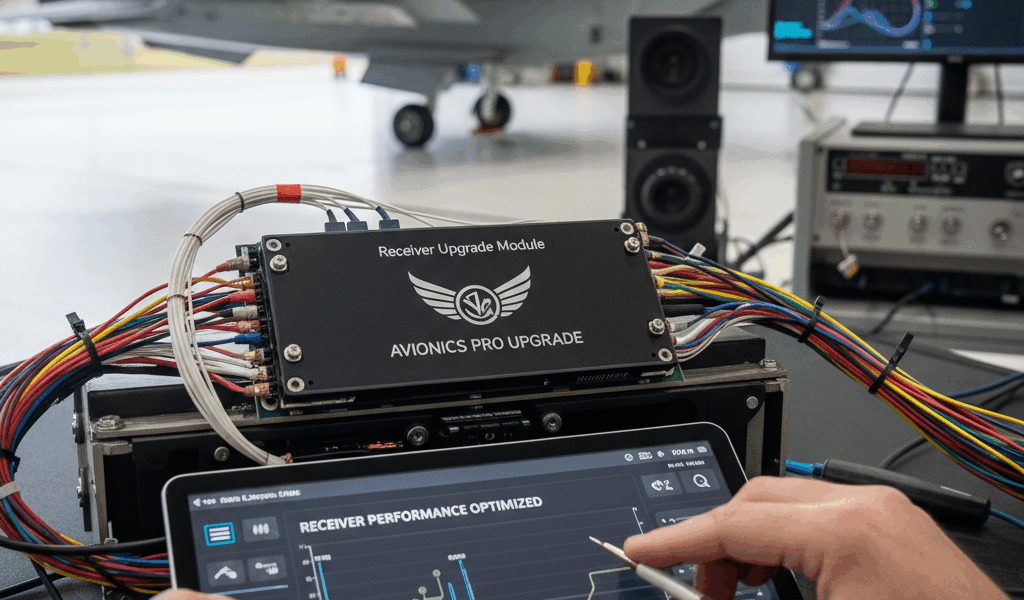
This past weekend, we completed a critical receiver upgrade at our primary monitoring station, and the results exceeded our expectations. By replacing our aging antenna and upgrading to a modern low-noise preamplifier, we achieved a remarkable 15 percent improvement in signal quality—without changing our installation location.
The upgrade project centered on three key components: a high-gain directional antenna optimized for our target frequency range, a state-of-the-art low-noise amplifier (LNA) with improved noise figure specifications, and upgraded coaxial cabling to minimize signal loss between the antenna and receiver.
Why Hardware Still Matters in the Age of Software-Defined Radio
While modern software-defined radio (SDR) systems can perform impressive digital signal processing miracles, they cannot recover information that was never captured in the first place. Think of it this way: no amount of computational power can extract aircraft position data from a signal that arrived at your antenna too weak to distinguish from background noise.
Our monitoring system processes thousands of aircraft transponder signals daily, tracking flight paths, altitudes, and velocities across our coverage area. Before the upgrade, we were consistently losing signals from aircraft at the edge of our coverage zone—roughly 180 to 200 nautical miles from our antenna. These borderline signals would fade in and out, resulting in incomplete flight tracks and gaps in our dataset.
Real-World Performance Improvements
The 15 percent signal quality improvement translates directly to operational benefits. We are now successfully decoding ADS-B messages from aircraft that were previously below our detection threshold. Our effective coverage radius expanded by approximately 25 nautical miles, bringing hundreds of additional flights per day into our monitoring capability.
Signal-to-noise ratio measurements confirm the improvement across our entire frequency range. Where we previously struggled to maintain lock on weak signals, we now have comfortable margins that ensure continuous tracking even in challenging propagation conditions.
Lessons for Data Collection Operations
This upgrade reinforces a fundamental principle in radio frequency data collection: the quality of your raw signal capture determines the upper limit of your system performance. You can optimize algorithms, tune filters, and adjust thresholds all day long, but you cannot create information that was lost before it ever reached your digitizer.
For anyone operating aircraft tracking systems, ADS-B receivers, or similar RF monitoring equipment, investing in quality front-end hardware pays immediate dividends. A better antenna and low-noise amplifier will outperform any amount of downstream signal processing applied to a weak, noisy signal.




Stay in the loop
Get the latest aerodata updates delivered to your inbox.