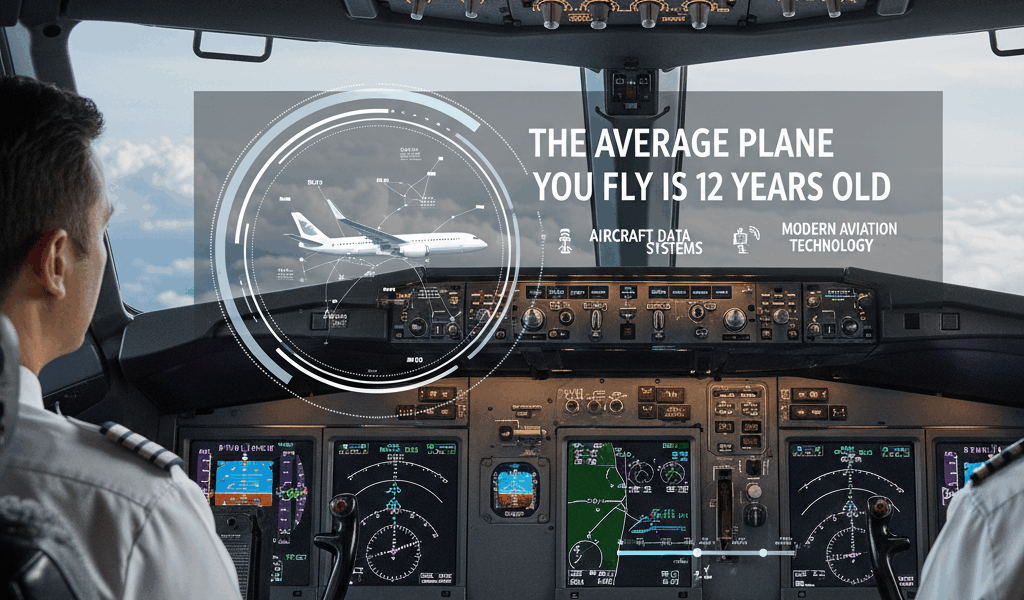
The global commercial aircraft fleet averages 12.4 years old and climbing. This aging fleet problem creates cascading challenges for airlines, maintenance organizations, and the traveling public. The numbers reveal an industry grappling with financial constraints, supply chain disruptions, and fundamental fleet planning dilemmas.
Measuring Fleet Age
Fleet age varies dramatically by operator and region. U.S. carriers operate an average fleet age of 14.2 years, with legacy carriers like American and United trending older than low-cost carriers. European mainline carriers average 11.8 years. Asian carriers, benefiting from recent growth and investment, average 8.6 years.
Individual aircraft examples illustrate the extremes. Delta operates MD-88/90 aircraft manufactured in the late 1980s, now over 30 years old. Meanwhile, recent startup carriers in Asia operate fleets with average ages under 3 years. This disparity reflects vastly different financial resources, strategic priorities, and growth trajectories.
The Economic Calculus
Aircraft economics favor newer equipment. Fuel efficiency improves approximately 1.5-2% annually across aircraft generations. A 15-year-old Boeing 737-800 burns roughly 15% more fuel per seat-mile than a new 737 MAX 8. At current fuel prices, this difference exceeds $1.2 million annually per aircraft.
Yet replacement economics are complex. New narrowbody aircraft list at $110-130 million, though discounts are common. Financing over 12-year terms requires annual capital service of $12-15 million. For some operators, the fuel penalty of older equipment remains cheaper than the capital cost of replacement.
Maintenance Cost Curves
Maintenance costs increase non-linearly with age. Young aircraft require minimal intervention beyond scheduled checks. As cycles and hours accumulate, structural inspections become more intensive. Aging systems require more frequent component replacement. A 20-year-old aircraft might incur maintenance costs 40-60% higher than a 5-year-old equivalent.
Heavy maintenance events present particular challenges. A C-check on an aging aircraft might reveal corrosion, structural fatigue, or wiring degradation requiring extensive repair. What should take 3 weeks extends to 6. The uncertainty makes fleet planning difficult and capacity volatile.
Supply Chain Constraints
The pandemic disrupted aircraft manufacturing for three years. Boeing and Airbus delivery rates collapsed in 2020-2021 and recovered slowly. Airlines planning fleet renewal found themselves unable to take new aircraft on schedule. The result: mandatory extension of aging fleet operations.
Current backlogs extend 6-8 years for popular narrowbody aircraft. An airline ordering today might not receive delivery until 2030-2032. This constraint forces operators to maintain equipment they would prefer to retire, investing in heavy maintenance that extends lifespan beyond original planning.
Safety Implications
Regulators impose additional requirements on aging aircraft. After aircraft reach 25 years or 75,000 cycles, widespread fatigue damage inspections become mandatory. Supplemental structural inspections add time and cost. Some operators find continued operation economically unjustifiable given regulatory compliance costs.
The safety record of older aircraft remains excellent. Rigorous maintenance programs, regulatory oversight, and conservative operational practices ensure aging aircraft meet safety standards. Age itself does not create hazard; inadequate maintenance does. Well-maintained older aircraft operate as safely as new equipment.
Regional Variations
Fleet age challenges concentrate in certain markets. African carriers operate some of the world’s oldest equipment, averaging over 20 years. Economic constraints, financing difficulties, and limited access to new aircraft perpetuate aged fleet operations. Latin American carriers face similar challenges.
The Gulf carriers present the opposite extreme. Emirates, Etihad, and Qatar Airways operate among the world’s youngest fleets, averaging 6-8 years. These carriers retire aircraft after 10-12 years, selling to secondary operators who extend service life in less demanding markets.
Strategic Responses
Airlines pursue multiple strategies to address fleet age. Retrofit programs upgrade older aircraft with fuel-saving winglets, improved interiors, and modern avionics. These investments extend competitive viability while new aircraft remain unavailable. Delta’s cabin modifications to older 757s transformed passenger experience without new aircraft investment.
Leasing provides flexibility. Aircraft lessors own approximately 50% of the global fleet, enabling operators to adjust capacity without capital commitment. When lease terms expire, older aircraft return to lessors for remarketing to secondary operators.
The aging fleet problem won’t resolve quickly. Manufacturing constraints, capital requirements, and fleet planning complexities ensure the global average age continues rising through the decade. Airlines, passengers, and regulators must navigate this reality together.
Subscribe for Updates
Get the latest articles delivered to your inbox.
We respect your privacy. Unsubscribe anytime.