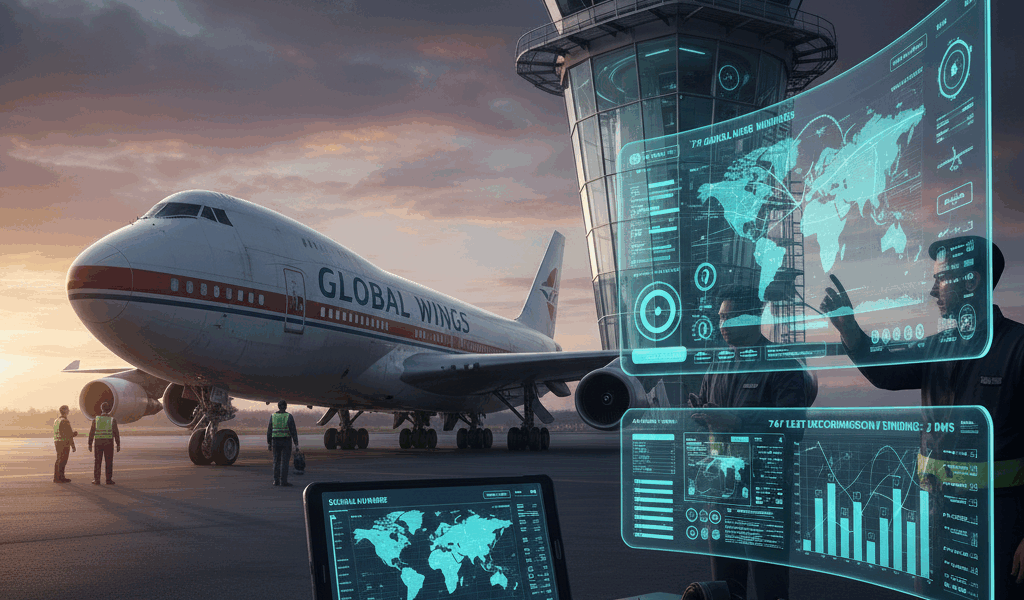
The Boeing 747, humanity’s first widebody airliner and an enduring symbol of aviation ambition, is disappearing from passenger service. Fewer than 50 remain in airline service worldwide, down from a peak of over 400. The data tracks the sunset of an aviation icon.
The Fleet in Numbers
Boeing delivered 1,574 747s between 1969 and 2023, when final production ended. Of these, approximately 320 remain operational: 270+ freighters continue profitable cargo operations while fewer than 50 serve passengers. The passenger fleet shrinks annually as remaining operators retire aging airframes.
Lufthansa, once the largest 747 passenger operator, has announced complete withdrawal by 2027. British Airways retired its final 747 in 2020, accelerated by pandemic economics. Qantas, once synonymous with 747 Pacific operations, retired its fleet in 2020. United and Delta removed passenger 747s years earlier.
Who Still Flies Them
Korean Air maintains the largest remaining passenger 747 fleet with approximately 10 operational 747-8Is. The airline uses these aircraft on premium routes where the type’s capacity and prestige remain valued. Air China, Rossiya, and Asiana operate smaller fleets.
The 747-8I, Boeing’s final passenger variant delivered from 2012-2017, represents the type’s last hope for extended passenger service. These aircraft, 10-12 years old, might operate another decade before economics force retirement. The older 747-400s, averaging 25+ years, face imminent retirement across remaining operators.
Why Retirement Came
Four-engine aircraft became economically obsolete as fuel prices rose and twin-engine widebodies achieved comparable range. A 747-400 burns approximately 11,000 liters per flight hour compared to 6,000 liters for a Boeing 777-300ER carrying similar passengers. The 45% fuel penalty became insurmountable.
Maintenance costs compound the disadvantage. Four engines require maintenance at four times the component rate of twins. The 747’s age means parts scarcity and specialized expertise requirements. Airlines report per-seat maintenance costs 30-40% higher than modern widebodies.
Crew training and operational complexity add hidden costs. Pilots must maintain 747 type ratings separately from other fleet types. The shrinking fleet makes 747 qualification less valuable, reducing crew flexibility. Some operators simply cannot justify training costs for diminishing operations.
The Freighter Exception
While passenger 747s disappear, freighter versions thrive. The 747-8F remains in active production until recent years, with UPS, Atlas Air, and Cargolux operating substantial fleets. The 747’s nose door enables cargo loading impossible on other widebodies, creating unique capability value.
Passenger-to-freighter conversions extend 747-400 service life. Retired passenger aircraft undergo modification adding main deck cargo capability. These converted freighters provide lower-cost cargo capacity than new-build freighters, extending the type’s relevance in cargo markets.
The Pandemic Acceleration
COVID-19 accelerated 747 retirement by 5-7 years. When traffic collapsed, airlines retired the least efficient aircraft first. The 747’s economics made it obvious for early retirement. Stored 747s faced prohibitive reactivation costs, and most will never fly passengers again.
The sudden retirement created problems. Some airlines found themselves without suitable aircraft for routes that demanded 747 capacity or range. The rush to widebody alternatives stressed already-constrained aircraft markets.
Legacy and Symbolism
The 747’s importance transcended economics. Its introduction in 1970 democratized international air travel, offering seat counts that enabled lower fares. The distinctive hump silhouette became aviation’s most recognized shape. Generations of travelers associate the 747 with adventure and international discovery.
Two 747-8Is continue as Air Force One, ensuring the type’s silhouette remains familiar despite passenger fleet decline. Boeing’s commitment to presidential transport in 747s extends the type’s public visibility beyond commercial retirement.
The Final Years
By 2030, passenger 747 operations will likely cease entirely. The remaining operators face mounting economic pressure and diminishing support infrastructure. Each retirement represents the end of an era: the last 747 departure from Heathrow, the final 747 trans-Pacific crossing, the ultimate revenue passenger flight.
The jumbo jet’s last days deserve attention. Future generations will never experience the unique upper deck lounge, the spiral staircase, the sheer scale of a four-engine widebody. The data shows a type in terminal decline, but the significance exceeds numbers. The 747 earned its place in aviation history, and its disappearance marks the end of an extraordinary chapter.
Subscribe for Updates
Get the latest articles delivered to your inbox.
We respect your privacy. Unsubscribe anytime.